
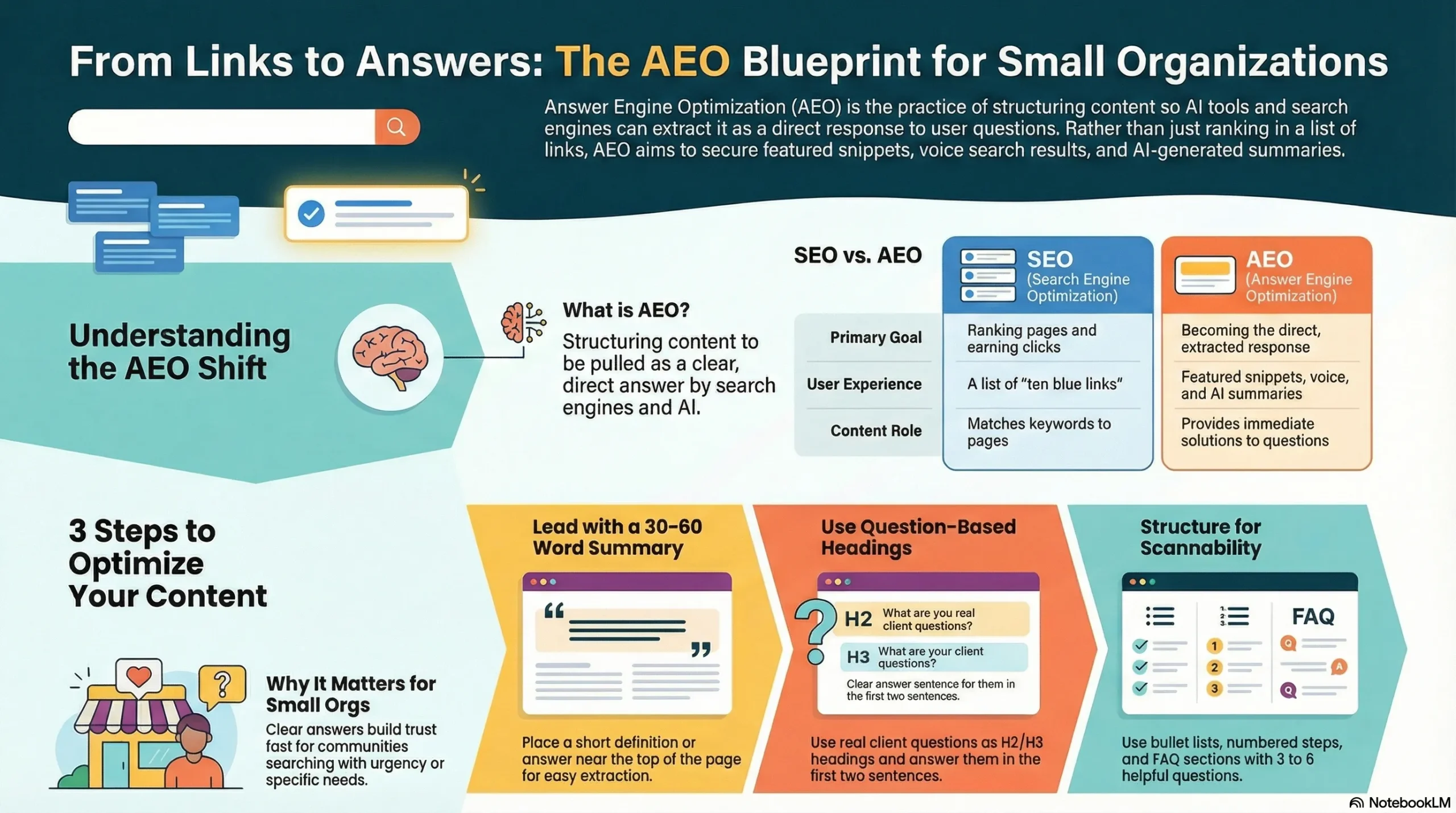
What is AEO?
AEO stands for Answer Engine Optimization. It means writing and structuring your content so search engines and AI-driven results can pull it as a clear, direct answer to a question. Think featured snippets, People Also Ask, voice search, and AI-generated summaries.
If SEO helps you show up in a list of links, AEO helps you show up as “the answer.”
Why AEO Matters Right Now
More searches are phrased as questions, and many platforms now respond with an instant answer instead of ten blue links. When your content is easy to extract and easy to trust, you increase your chances of being selected and cited.
For small service-based businesses and nonprofits, that matters because:
-
You often serve a specific community or need
-
People search with urgency and simple questions (“How do I…?” “Who helps with…?”)
-
Clear answers build trust fast, even before someone clicks
AEO vs SEO (quick and practical)
-
SEO focuses on ranking pages for keywords and earning clicks.
-
AEO focuses on answering questions so well that the platform can use your content as the direct response.
Good news: AEO does not replace SEO. It builds on it.
How to optimize for AEO (beginner-friendly steps)
1) Lead with the answer
Add a short definition or summary near the top of the page, usually 30 to 60 words. That “answer-first” format is easier for engines to lift into snippets and summaries.
2) Use questions as headings
Pull real questions from your clients, donors, or community and make them H2/H3 headings. Then answer each one directly in the first sentence or two.
Examples:
-
“What does a digital marketing strategy include?”
-
“How much does it cost to run Google Ads for a local service business?”
-
“How can a nonprofit improve donations through email?”
3) Keep answers short, clear, and specific
AEO favors content that is easy to scan:
-
short paragraphs
-
bullet lists
-
numbered steps when the query implies a process
4) Add an FAQ section that matches what people actually ask
Include 3 to 6 FAQs at the bottom of the page. Focus on helpful, informational answers, not sales copy.
5) Use structured data when it truly fits
If you have a true FAQ section, FAQPage structured data can help engines understand the Q&A format.
AEO Examples for Service Businesses and Nonprofits
Service business AEO idea:
Create a page titled “How to choose a (service) provider in (city)” and answer questions like licensing, timelines, pricing ranges, and what to expect.
Nonprofit AEO idea:
Create a page titled “How to donate to (cause)” with clear answers about tax receipts, where funds go, recurring donations, and volunteer options.
FAQ: AEO basics
What does AEO stand for?
AEO stands for Answer Engine Optimization. It is the practice of making your content easy for search engines and AI tools to extract as a direct answer.
Is AEO different from SEO?
Yes. SEO is about ranking and visibility across search results, while AEO focuses on being selected as the single best answer in snippets, question boxes, and AI summaries.
What type of content works best for AEO?
Pages that answer specific questions clearly: FAQs, how-to guides, definition posts, comparisons, and “what to expect” pages.